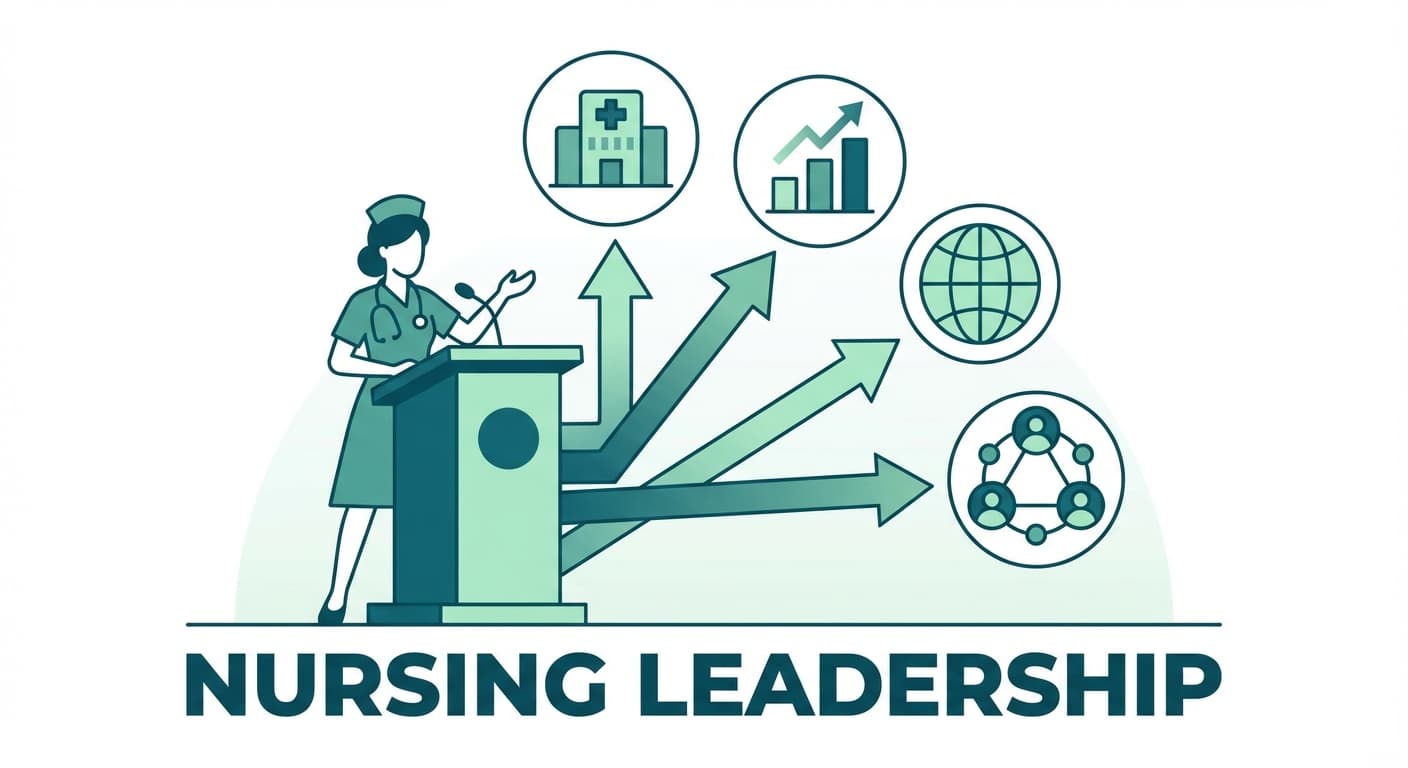
Healthcare is facing a leadership crisis—and nurses are the answer most organizations haven't considered seriously enough.
Despite making up the largest segment of the healthcare workforce, nurses remain dramatically underrepresented in executive suites and boardrooms. Only 6% of hospital board members have clinical nursing backgrounds, and fewer than 5% of healthcare CEOs started their careers as nurses. That's a problem—not just for the nursing profession, but for the patients and communities these organizations serve.
Here's why I believe nurses don't just deserve a seat at the table—they're essential to it.
The Gap Between the Bedside and the Boardroom
Healthcare decisions are increasingly made by people who have never held a patient's hand at 3 AM, never navigated a medication error in real time, or never watched a family fall apart because the system failed them.
That distance between decision-makers and frontline reality creates blind spots:
- Staffing models designed around spreadsheets rather than patient acuity
- Technology implementations that disrupt clinical workflows instead of supporting them
- Quality metrics that measure what's easy to count rather than what matters
- Cost-cutting initiatives that save dollars while losing nurses—and, ultimately, patients
Nurses who've lived these realities bring something no MBA alone can teach: the perspective of someone who has seen the consequences of executive decisions at the point of care.

What Nurses Bring to the Executive Table
Clinical Credibility
When a nurse executive speaks about patient safety, staffing needs, or quality improvement, they speak from experience. This credibility isn't just symbolic—it changes the conversation.
I've watched financial discussions shift entirely when someone in the room can say: "Here's what that budget cut actually looks like on a med-surg floor at shift change." Numbers on a screen become real patients with real risks.
Systems Thinking
Nurses are natural systems thinkers. Every shift, we manage complex, interdependent processes—medications, diagnostics, provider communications, patient education, discharge planning—simultaneously. We see how a delay in one area cascades through the entire system.
This skill translates directly to executive leadership, where understanding interconnected operations is essential for effective decision-making.
Patient-Centered Values
The nursing profession is built on advocacy. We're trained to ask: "What does this mean for the patient?" That question—applied at the strategic level—is transformative.
When nurses are in the room where budget, policy, and operational decisions are made, the patient's voice is represented. Without nursing leadership, that voice is often absent.
Workforce Insight
No one understands nursing workforce challenges better than nurses themselves. With the profession facing critical shortages—projections estimate a deficit of 200,000 to 450,000 nurses by 2030—organizations need leaders who understand retention, burnout, and what actually makes nurses stay.
Nurse executives don't guess about these issues. They've lived them.
The Evidence for Nurse Leadership
This isn't just philosophy—the data supports it:
- Hospitals with nurse representation on boards show better quality outcomes and lower mortality rates
- Organizations led by clinician-executives demonstrate stronger financial performance than those led exclusively by non-clinicians
- Magnet-designated hospitals—which require robust nursing leadership structures—consistently outperform peers on patient outcomes, nurse satisfaction, and financial metrics
- The IOM's Future of Nursing report explicitly called for nurses to serve as full partners in healthcare leadership and redesign
The correlation is clear: when nurses lead, organizations perform better. Not despite the clinical background—because of it.
Breaking Down the Barriers
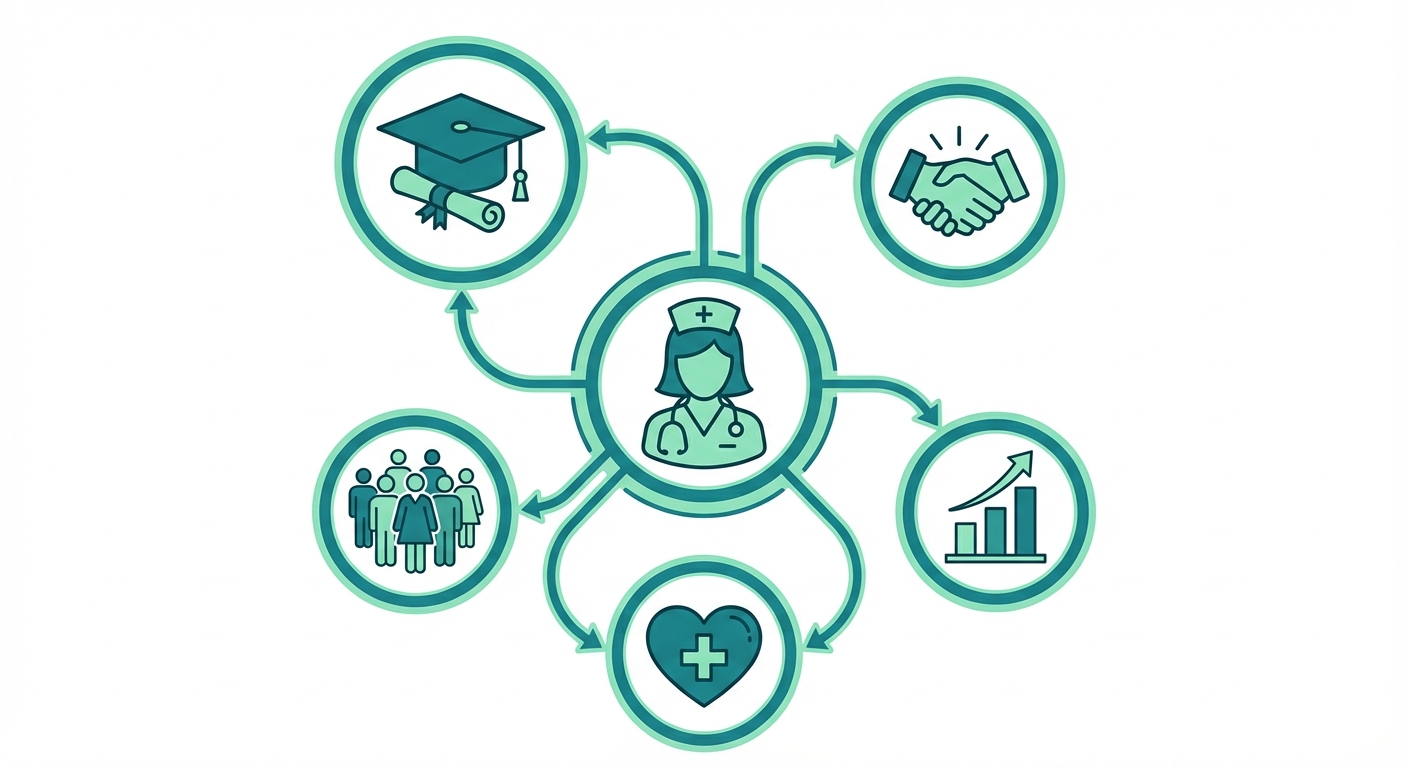
If the case is so strong, why aren't more nurses in the boardroom? Several barriers persist:
The Credential Gap
Many executive roles require MBA, MHA, or doctoral degrees. While nursing education is rigorous, it hasn't traditionally included business and finance curricula. This is changing—dual MSN/MBA programs are growing rapidly—but the pipeline takes time.
This is exactly why I'm pursuing my dual MSN/MBA. Clinical expertise alone isn't enough to be taken seriously in the C-suite. You need to speak the language of finance, strategy, and operations alongside the language of care.
The Perception Problem
Nursing is still perceived by some as a "supporting" rather than a "leading" profession. This outdated view ignores the complexity of modern nursing practice and the leadership nurses demonstrate daily.
Changing this perception requires visibility. Every nurse who steps into a leadership role—whether as a charge nurse, director, VP, or CNO—expands what the next generation sees as possible.
The Pipeline Problem
Many nurses don't pursue leadership because they've never seen it modeled. If every leader you've encountered came from a business or physician background, it's natural to assume that's the only path.
Mentorship matters enormously here. Nurse leaders have a responsibility to actively develop and sponsor the next generation.
The Identity Tension
Some nurses feel that moving into leadership means leaving nursing behind. This couldn't be further from the truth. Nurse executives are still nurses—they've simply expanded their scope of practice to include populations and systems rather than individual patients.
The values don't change. The scale does.
The Path Forward
For Individual Nurses
If leadership interests you, start building now:
- Pursue advanced education that combines clinical and business knowledge
- Seek leadership opportunities at every level—committees, projects, charge roles
- Find mentors who've made the transition and learn from their journey
- Develop financial literacy—understand how your unit's budget works, how reimbursement functions, how strategic decisions are made
- Build your network beyond nursing—connect with executives, board members, and leaders in other disciplines
For Healthcare Organizations
If you're serious about better outcomes, invest in nursing leadership:
- Create pathways from clinical practice to executive roles
- Sponsor nurses for advanced leadership education
- Include nurses on boards and in strategic planning
- Value clinical experience as a leadership qualification, not just an interesting background detail
- Compensate nurse executives comparably to other C-suite roles
For the Profession
Nursing organizations and academic institutions must:
- Expand dual-degree programs that prepare nurses for executive roles
- Develop leadership curricula earlier in nursing education
- Advocate for board representation requirements
- Celebrate and amplify nurses who lead at the highest levels
Why This Matters Now
Healthcare is at an inflection point. The challenges we face—workforce shortages, rising costs, health equity gaps, technology transformation, an aging population—demand leadership that understands both the human and operational dimensions of care.
Nurses are uniquely prepared for this moment. We've always been the ones who hold the system together at its most stressed points. It's time we helped redesign the system itself.
The future of healthcare leadership isn't nurses versus administrators. It's nurses alongside administrators, physicians, and other professionals—each bringing their essential perspective to shared challenges.
But that future only happens if nurses claim their seats at the table. And if organizations have the wisdom to pull up more chairs.
Interested in nursing leadership? I'd love to connect—get in touch.