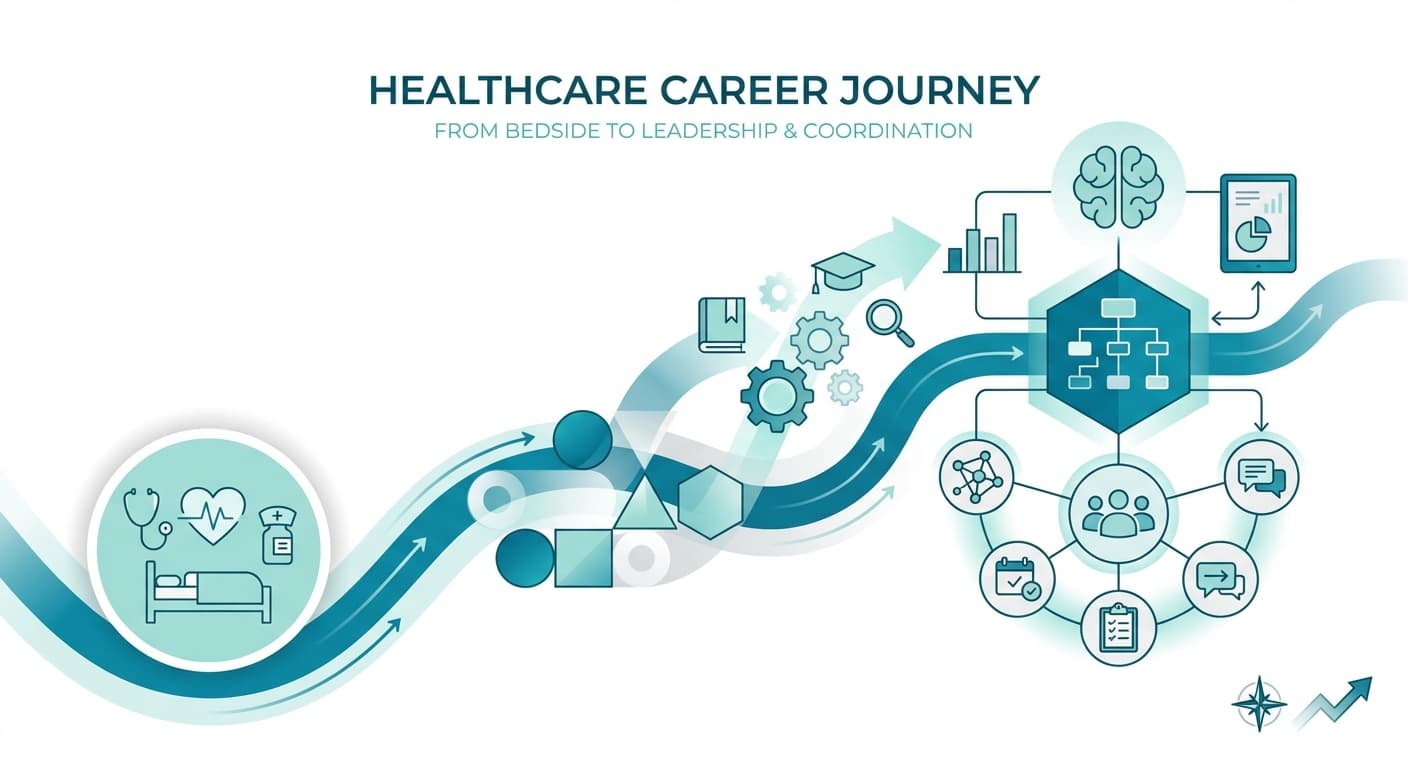
Making the leap from bedside nursing to case management was one of the most significant decisions of my career. If you're considering this transition, you're probably wondering what it's really like on the other side.
In this post, I'll share my honest experience—the unexpected challenges, the surprising rewards, and the practical steps that made my transition successful.
Why I Left the Bedside (And Why It Wasn't Easy)
Let me be clear: I loved bedside nursing. The immediate impact of easing someone's pain, the sacred moments of being present during life's most vulnerable times, the camaraderie of a tight-knit unit—these things are irreplaceable.
But after seven years at the bedside, I noticed patterns I couldn't ignore:
- Patients bouncing back within weeks of discharge
- Families overwhelmed by complex care plans no one explained clearly
- Gaps in communication that led to preventable complications
- The feeling that I was treating symptoms while the system failed patients
I didn't leave bedside nursing because I stopped loving it. I left because I wanted to solve problems I could only see from that vantage point.
What Case Management Actually Looks Like
The job title "Case Manager" encompasses vastly different roles. Here's what a typical day looks like in my current position:
Morning: Risk Stratification and Planning
I start by reviewing new admissions, identifying patients at high risk for complications or readmission. I'm looking at the whole picture—diagnoses, social situation, insurance, and discharge disposition.
Midday: Patient and Family Engagement
The heart of the role. I'm in rooms having real conversations:
- Explaining what happens next (and why it matters)
- Identifying barriers—transportation, medication costs, family support
- Coordinating between specialists who often don't communicate with each other
Afternoon: System Navigation
The behind-the-scenes work most people don't see:
- Securing prior authorizations
- Arranging home health services
- Coordinating with skilled nursing facilities
- Advocating with insurance companies
Late Day: Documentation and Follow-Up
If it isn't documented, it didn't happen. I spend time ensuring the patient's care plan is clearly communicated across all settings.
The Skills That Transfer (And The Ones You'll Build)
Your Nursing Background Is Your Superpower
Case managers from bedside backgrounds bring:
- Clinical assessment skills that catch subtle changes others miss
- Patient communication expertise refined through thousands of interactions
- Crisis management abilities honed in high-pressure situations
- Understanding of workflow on nursing units
What You'll Need to Develop
Be prepared to build entirely new skill sets:
Systems Thinking You'll need to understand how insurance, reimbursement, regulations, and community resources interconnect. The learning curve is steep but essential.
Documentation for a Different Audience Your notes now serve legal, regulatory, and insurance purposes. Precision and thoroughness take on new meaning.
Influence Without Authority You'll coordinate care among physicians, specialists, and facilities without any direct power over them. Relationship-building becomes your primary tool.
Tolerance for Ambiguity Bedside nursing often has clear protocols. Case management involves judgment calls with incomplete information and competing priorities.

Practical Steps for Making the Transition
1. Gain Exposure Before You Leap
- Shadow your facility's case management team
- Volunteer for discharge planning committees
- Build relationships with social workers and utilization review nurses
- Ask to participate in interdisciplinary rounds
2. Pursue Relevant Education
Consider certifications that strengthen your candidacy:
- ACM (Accredited Case Manager) from ACMA
- CCM (Certified Case Manager) from CCMC
- RN-BC in Nursing Case Management from ANCC
Many employers prefer or require these credentials, and studying for them builds essential knowledge.
3. Develop Your Understanding of Key Areas
Before interviewing, ensure you understand:
- Medicare/Medicaid regulations (CMS rules drive much of what we do)
- InterQual and Milliman criteria for level of care
- HIPAA and care coordination privacy considerations
- Value-based care models and quality metrics
4. Prepare for Common Interview Questions
Be ready to discuss:
- A time you advocated for a patient against systemic barriers
- How you've handled family conflict or difficult discharge situations
- Your understanding of utilization management
- How you prioritize when everything seems urgent
The Honest Truth About Tradeoffs
I won't sugarcoat it—case management involves real tradeoffs:
What You'll Miss
- The immediate feedback of seeing a patient improve on your shift
- The physical activity of bedside care
- The close bonds of working consistently with the same team
What You'll Gain
- The ability to see the full arc of a patient's healthcare journey
- Influence over systemic issues that frustrated you at the bedside
- More predictable hours (typically)
- A different kind of intellectual challenge
Is Case Management Right for You?
This transition might be right for you if:
- You find yourself thinking about what happens to patients after discharge
- You're energized by solving complex, multi-faceted problems
- You enjoy communicating with diverse stakeholders
- You want to influence healthcare at a systems level
- You're comfortable with less immediate, more distributed impact
It might not be right if:
- You thrive on hands-on patient care
- You prefer clear protocols and immediate outcomes
- You find insurance and regulatory discussions draining
- You need the physical movement of bedside nursing
The Bottom Line
Transitioning to case management isn't leaving nursing—it's expanding it. The clinical judgment, patient advocacy, and critical thinking you developed at the bedside become the foundation for a different kind of impact.
Three years into this transition, I'm convinced I made the right choice. Not because case management is better than bedside nursing—it isn't. It's different. And that difference aligned with where I wanted to grow professionally.
If the patterns I described resonate with you—if you see the gaps and want to help fill them—case management might be your next chapter too.
Considering the transition? I'm happy to answer questions—get in touch.